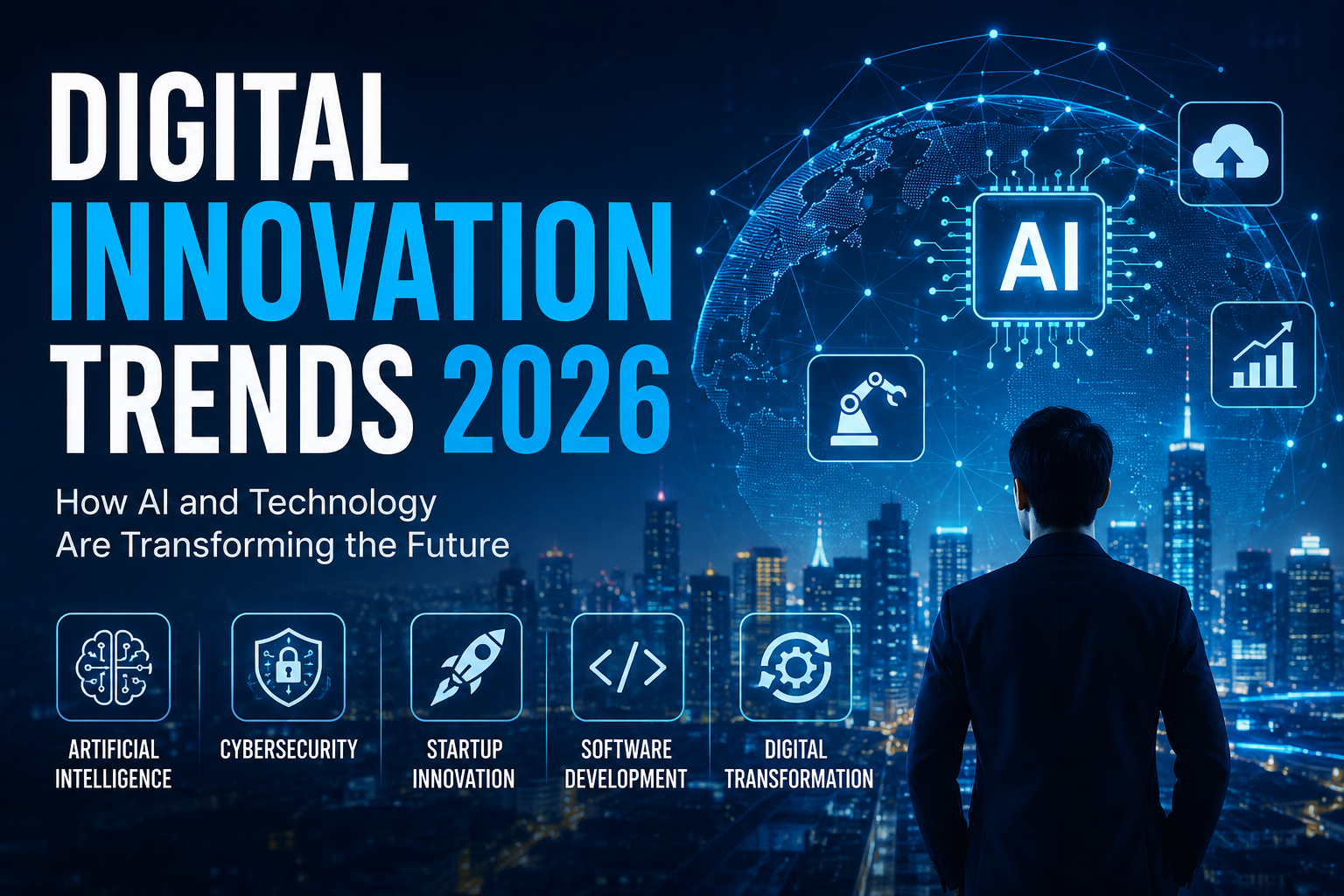
Digital Innovation Trends 2026: The Future Is Already Here
Digital innovation trends 2026 are reshaping how businesses, developers, and startups operate in a rapidly evolving digital world. From artificial intelligence to cybersecurity, the pace of technological change is faster than ever, creating both opportunities and challenges for those who want to stay ahead.
Whether you’re a developer, entrepreneur, or tech enthusiast, understanding these trends is essential to remain competitive in today’s digital ecosystem.
1. AI Becomes the Core of Everything
Artificial Intelligence is no longer just a buzzword—it’s the backbone of modern technology.
From chatbots to predictive analytics, AI is now integrated into almost every industry. Businesses use AI to automate workflows, improve customer experience, and make smarter decisions.
Key AI developments:
- Generative AI for content and coding
- AI-powered automation tools
- Machine learning in business analytics
AI is also becoming more accessible, allowing small businesses and startups to compete with larger companies.
2. Cybersecurity Is a Top Priority
As technology advances, so do cyber threats. This makes cybersecurity one of the most critical digital innovation trends in 2026.
Companies are investing heavily in security systems to protect data and maintain trust.
Important cybersecurity trends:
- Zero Trust security models
- AI-driven threat detection
- Cloud security solutions
If you run a website or digital business, ignoring cybersecurity is no longer an option.
3. Rise of Startup Innovation Ecosystems
Startups are driving innovation faster than traditional corporations. Thanks to cloud computing and open-source tools, launching a tech startup is easier than ever.
What’s fueling startup growth:
- Low-cost development tools
- Access to global markets
- Increased funding opportunities
Many startups are focusing on niche solutions, solving specific problems with highly targeted technology.
4. Modern Software Development Evolution
Software development is becoming faster, smarter, and more collaborative.
Developers now rely on automation, AI assistants, and cloud-based environments to build applications efficiently.
Trends in development:
- Low-code and no-code platforms
- DevOps and continuous integration
- AI-assisted coding tools
These advancements reduce development time and improve product quality.
5. Digital Transformation Across Industries
Digital transformation is no longer optional—it’s a necessity.
Businesses in finance, healthcare, retail, and education are adopting technology to stay relevant.
Examples of digital transformation:
- E-commerce automation
- Online education platforms
- Smart financial systems
If you want to learn more about digital business strategies, you can explore:
👉 https://lesothopfmhackathon.com/category/technology/
6. Automation Is Redefining Productivity
Automation tools are helping businesses reduce costs and increase efficiency.
From marketing automation to workflow management, companies are streamlining operations like never before.
Popular automation uses:
- Email marketing automation
- Customer support bots
- Business process automation
Automation allows teams to focus on high-value tasks instead of repetitive work.
7. The Future of Digital Innovation
Looking ahead, digital innovation will continue to accelerate. Technologies like blockchain, quantum computing, and advanced AI will shape the next decade.
To stay ahead:
- Keep learning new technologies
- Adapt quickly to market changes
- Invest in digital tools
- Focus on innovation
For more insights on global tech trends, you can also read:
Conclusion: Stay Ahead or Get Left Behind
Digital innovation trends 2026 show one clear message: adapt or fall behind. Technology is evolving at an unprecedented pace, and those who embrace change will gain a significant advantage.
Whether you’re building a startup, managing a business, or learning to code, now is the perfect time to leverage these trends.
👉 Explore more insights and updates on technology here:
https://lesothopfmhackathon.com/